




Root Canal Treatment
Root Canal Treatment
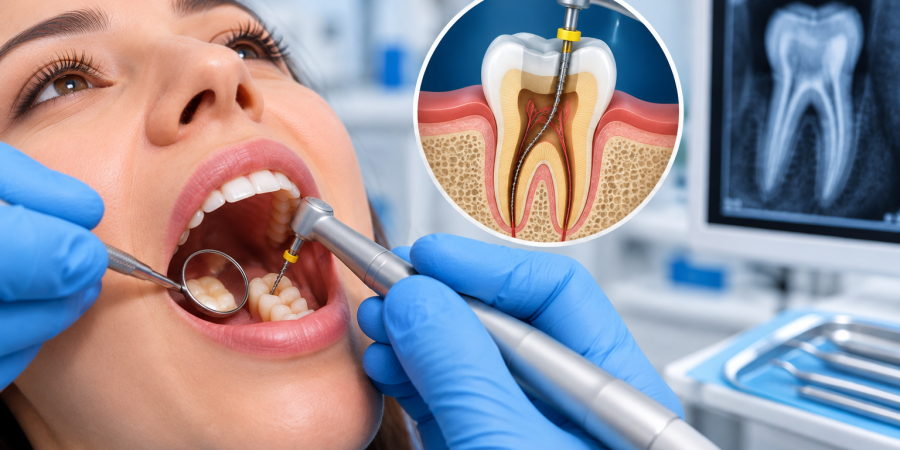
Root Canal Treatment (RCT) is a common dental procedure used to save a tooth that has become infected or severely damaged. When decay, cracks, or injury reaches the inner pulp of a tooth, it can cause persistent pain, sensitivity, and infection. Root canal treatment removes the infected pulp, cleans the inside of the tooth, and seals it to prevent further infection.
At our dental clinic, root canal treatment is performed using modern dental techniques with a focus on preserving your natural tooth. Saving the natural tooth can help maintain normal chewing function, tooth alignment, and overall oral health.
When Is Root Canal Treatment Needed?
Root canal therapy may be recommended when the pulp inside the tooth becomes inflamed or infected. Early treatment can help prevent the infection from spreading to surrounding tissues.
Common signs that may indicate the need for RCT include:
- Persistent Toothache: Continuous or recurring pain may indicate infection inside the tooth.
- Sensitivity to Hot or Cold: Prolonged sensitivity after exposure to hot or cold foods may be a sign of pulp damage.
- Pain While Chewing: Discomfort when biting or chewing can occur when the tissues surrounding the tooth are affected.
- Swollen or Tender Gums: Infection around the tooth may cause swelling or tenderness.
- Dental Abscess: A severe infection can result in an abscess or pus formation around the tooth.
- Deep Tooth Decay: Extensive cavities can reach the inner pulp and require root canal treatment.
- Cracked or Injured Tooth: Dental trauma can damage the pulp even when the external damage appears limited.
Root Canal Treatment Procedure
Before treatment, the dentist examines the affected tooth and may take an X-ray to determine the extent of infection and understand the root structure.
The typical root canal treatment process includes:
- Dental Examination: The tooth and surrounding tissues are carefully evaluated.
- Local Anesthesia: The affected area is numbed to ensure patient comfort during treatment.
- Access Opening: A small opening is created in the tooth to access the infected pulp.
- Cleaning and Shaping: Infected or damaged pulp tissue is removed, and the root canals are carefully cleaned and shaped.
- Sealing the Canals: The cleaned canals are filled and sealed to help prevent reinfection.
- Dental Restoration: A filling or dental crown may be recommended to restore the tooth’s strength and function.